Pricing Your Home To Sell

As a seller, you have 2 goals:

  1. To get the most money possible
  2. To sell as quickly as you can.

To do this, you must be realistic. Price is the number one factor that most home buyers use in determining which homes to view. Although the price is set by you, the seller, the value of the home is determined by the buyer. Don’t allow your bias and enthusiasm to cloud your judgment and lead to overpricing – a mistake you can’t afford to make.

The following are some factors to consider when selling your home:

What Affects Your Asking Price?

  • Urgency. How quickly must you sell?
  • Competition. How many homes are currently available in your price category and area?
  • Available Financing. Does your home come with an assumable loan that is below today’s rate? What are the current home loan interest rates? What financing alternatives are available for your home and area?
  • Competitive Market Analysis. Do you know what similar homes in the area sold for within the last six months?
  • Expenses. What are your selling costs?

What Doesn’t Affect Your Asking Price?

  • Original Cost. Your price is determined by today’s market, not what you paid for it
  • Investment in Improvements. Potential buyers will evaluate your home (i.e. wallpaper and carpet) and may include the costs to remove or replace it in their offer.
  • The Cost to Build Your Home Today. A replacement value is determined for insurance purposes only.
  • Personal Attachment. Buyers purchase a home based on their emotions, not yours. You must try to be impartial to the sentimental aspects of your home when coming to a fair asking price.
  • Neighbours Claims. Don’t listen to what your neighbours tell you the fair market value for your home is. Other homes in your neighbourhood may not be as similar as you think. Also the terms accepted by both the buyer and seller greatly affect the sale price.

Problems with Overpricing Your Home

  • You’ll Help Sell the Competition. The “correctly priced” homes look even better if yours is overpriced. Most buyers are competitive shoppers and will use the high price as a benchmark of what not to buy.
  • Your Home Will Stay on the Market a Long Time. The majority of buyers will see your house within the first few weeks of it coming on the market. If you don’t sell them then, it could take months to replace them with a new round of buyers.
  • You’ll Lose Market Interest and Qualified Buyers. Serious buyers use the value, quality and price of similar properties as deciding factors and will often go with the lower priced home feeling it has more value.
  • A Negative Impression is Created – Buyers and agents will assume something is wrong with you house that would cause it not to sell.
  • You (The Seller) Could Lose Money – If you need to hold your house longer than anticipated, you’ll be making extra mortgage payments as well as incurring additional taxes, insurance and maintenance costs
  • You (The Seller) May Have to Accept Less Money. Often a seller will accept less than fair market value in order to sell because of an approaching deadline.
  • There is the Potential for Appraisal Problems. The appraiser from your buyer’s lending institution must agree that the home is worth the asking price. If the appraiser believes the price is inflated, the loan may not be approved.


Preparing for An Open House

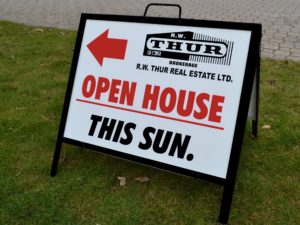
open house sign

There are some easy steps that you can take to help your R.W. Thur Real Estate Ltd. REALTOR® hold a successful open house. As a general rule when selling a house, you should always take extra care to keep all areas of your home clean and tidy:

  • Living Areas – vacuumed and dusted, toys/books put away, de-clutter, let as much natural light in as possible
  • Kitchen / Bathroom – all surfaces should be wiped clean and be tidy, no stains in the sink, put toiletries away, organize cabinets, dishes cleaned and put away
  • Walls and ceilings – wiped clean from stains and fingerprints, repair chips in paint or rips in wall paper
  • Doors – fix squeaky hinges, make sure latches work and doors don’t stick
  • Windows – clean windows, repair ripped screens, wipe down ledges
  • Lighting – make sure all light bulbs are working, fix broken wall plates
  • Pets – clean litter box! Make sure hair is well vacuumed, keep pets in separate room or take them with you during open house
  • Exterior – wipe down cobwebs, shovel / sweep all walkways, wash siding, fresh landscaping

open house sign

Additional things to address before your REALTOR® holds an open house:

  • Lock away all valuables
  • Avoid cooking strong smelling foods (Although some foods can help – fresh bread, pie, popcorn, coffee)
  • If you have fireplaces, make sure they’re working and turned on
  • De-clutter!

FAQ for Sellers

When is the best time to sell my house?

Properties sell throughout the entire year. However the market, like any, is a function of supply and demand, as well as other economic factors. The time of year you choose to sell can make a difference in the amount of time it takes and the final selling price. Weather conditions are often a consideration. As a general rule the real estate market picks up in the early spring following a slower winter.

In the middle of summer, the market usually slows down. The end of July and August are often the slowest months for real estate sales. The strong spring market often places upward pressure on interest rates and many prospective home buyers take vacations during mid-summer.

After the summer slowdown, sales tend to pick up for a second, less vigorous season, which usually lasts into November. The market then slows again as buyers and sellers turn their attention to the holidays.

During the slower periods of the year, a benefit as a seller is that there are fewer homes on the market to compete with, however there are also fewer buyers looking. Generally, you will have the best results if your house is continuously available for buyers until your house is sold.

What are important factors to consider when selling a home?

The two most important factors in selling a home are price and condition. The first step is to price it properly. Then, go through the house to see if there are any cosmetic defects that can be repaired. It’s good to remove as much clutter as possible and improve the flow of walking space throughout the home.

A third factor is exposure. It is also important that the home gets the exposure it deserves through open houses, advertising, good signage and listing on the local multiple listing service, as well as the internet.

Choose the REALTOR® that you believe will get the job done, not the one that quotes you the highest price. Some real estate sales representative may quote you a higher price in order to gain your listing and then have no success in selling it. At R. W. Thur Real Estate Ltd., we’re honest and upfront about our opinions and use conclusive evidence to back it up.

What should I do to get my house ready?

The way you live in a home and the way you sell a house are two different things. First and foremost, it’s important to “declutter” counter tops, walls and rooms. Too many “things” make it difficult for the buyer to see their possessions in your rooms or on your walls, however don’t strip everything completely or it will appear bare and uninviting. The second step would be to clean all the rooms, furnishings, floors, walls and ceilings. It’s especially important that the bathrooms and kitchen are spotless. Organize closets. Make sure the basic appliances and fixtures work and get rid of leaky faucets and frayed cords. When showing, make sure the house smells good, anything from candles, air fresheners or home cooking.

Another important consideration is “curb appeal.” People driving by a property will judge it from outside appearances and make a decision as to whether or not they want to see the inside. Sweep the sidewalk, mow the lawn, trim the bushes, weed the garden and clean debris from the yard. Clean the windows and make sure the paint is not chipped or flaking.

Should I make repairs?

Minor repairs before putting the house on the market can lead to a better sales price or faster close. Buyers often include an “inspection clause” in the purchase contract, which allows them to back out if numerous defects are found. Once the problems are noted, buyers can attempt to negotiate repairs or lower the price with the seller. Any known problems that are not repaired must be revealed as a material defect. You do not have to repair the problem, only reveal it, however the house should be appropriately priced for that defect.

How much is my home worth?

There are a number of ways people can determine their homes value, the two main ways being an appraisal or a comparative market analysis.

At R. W. Thur Real Estate Ltd. we offer comparative market analyses at no charge as well as formal written opinions of value, if needed for other reasons, at a cost. Appraisers review numerous factors and base information on recent sales of similar properties, their location, square footage, construction quality, excess land, views, water frontage and amenities such as garages, number of baths, etc.

A comparative market analysis on the other hand is informal verbal estimate of market value performed by a real estate sales representative or broker. It is based on sales and listings that will compete with your property that are similar in size, style and location. A range of values will be determined thus arriving at a probable market value. If you’re thinking about listing, call one of our qualified sales representatives for a CMA to get an idea of what your home could sell for.

What are my obligations to disclose?

Items sellers often disclose include: homeowners association dues: whether or not work done on the house meets local building codes or if there were permit requirements; the presence of any neighborhood nuisances or noises which a prospective buyer might not notice, such as any restrictions on the use of property, including but not limited to zoning ordinances or association rules. You should also disclose if you’re aware that in the past it was used for any illegal purposes. You must also reveal any hidden defects that would materially affect the enjoyment or use of the home. Ie. asbestos, UFFI, water leaks, old utilities.

It is wise to review the seller’s written disclosure prior to a home purchase and ask questions if it does not satisfy you entirely. Sellers do not have to disclose the terms of other offers, however you should disclose the existence of other offers so that all parties are aware that they should be submitting their best offer.

How do I gain more Interest in my House?

Even in a slow market, the two most important factors in selling a home are price and condition.

If a home is not getting enough interest to sell, the biggest reason for that is an inflated asking price. The first thing to gain more interest attention to your house is to lower the price. After that, go through the house and see if there are any major cosmetic defects that can be easily repaired. The third step is to ensure the house is getting proper exposure on the market through open houses, advertising, good signage, and listing on MLS.

Are there standard conditions in an offer?

Yes, the two most frequent conditions in an agreement of purchase and sale are financing and inspections. A third condition that you may see is the sale of the buyers property, this is often a longer time period for condition but it’s a reality that the buyer of your home generally has a house they need to sell before they have the finances to purchase your home. Ensure you read and fully understand all the clauses within your contract before signing

Should I take offers with conditions?

That’s slightly dependent on the type of market you’re selling in, whether it’s a buyer’s or seller’s market. I can also depend on the condition of your home, the price you’re looking to get for it, how urgent it is for you to sell your current house, as well as the quality of the offer. Unless your home is in a multiple offer situation, it is quite common to see some conditions within an offer. The length of the conditions can make a big difference as to whether it is worth accepting or waiting for another buyer who may not have so many conditional needs.
Advantages of Listing with a Realtor®

  1. Your time is valuable – It can be very time consuming trying to sell your home. The effort and time needed to hold open houses and allow for viewings is quite disruptive to your day-to-day life. Let a qualified R. W. Thur Real Estate Ltd. sales representative do the work for you.
  2. Greater Exposure – We list our homes on our website, facebook, Local print advertisements, as well as the MLS system. The greater exposure leads to more buyers interested in your home and ultimately a higher selling price. Don’t risk settling for a lower offer when the right buyer may not even know your house is for sale.
  3. Qualified Buyers – Realtors bring more qualified buyers, as they know the financial restrictions and detailed specifications of what their buyers are looking for. You can waste a lot of time showing buyers your home without them having the resources to actually purchase it.
  4. Safety– Don’t risk opening up your house to strangers. Holding your own open houses can be difficult to manage everyone inside your home. REALTORS® are responsible for everyone who comes to their open houses and are trained to spot suspicious activity.
  5. Accountability– REALTORS® are accountable for all the details in a transaction. Selling a home can be confusing, we have trained industry knowledge to ensure everything is recorded properly and you won’t have any surprises or issues at closing.

Using a Realtor®

There’s a lot of time, effort and energy spent into selling or buying a home. This can be exhaustive for an individual if you choose to do it by yourself, and not with the assistance of a professional Real Estate Agent. You may run the risk of losing money and getting a less-than-favorable deal. REALTORS® have years of education and experience and help you not only make a solid and responsible financial decision, but also protect you from the many risks that exist within the real estate market.

Risks of Buying or Selling without a professional on your side?

Buying or selling without a Real Estate Professional can have serious negative consequences. First off, it may take you longer to sell your home, resulting in wasted time and potentially lost funds. If you’re working full-time, the ability to sell a home is more difficult; you may have to take sporadic time off work and have a tight schedule for holding open houses and viewings, limiting the interest from potential buyers. Along with this, it can be quite uncomfortable letting just anybody into your home, and you may not know how to properly protect yourself against theft or fraud. A REALTOR® holds effective open houses with a stronger ability to detect any suspicious activity.

As a do-it-yourself seller or buyer, you’re likely limited to your knowledge and ability when it comes to selling a home. A Real Estate professional understands the lengthy paperwork and legal documents that go along with home sales and can also better determine what is or isn’t a good deal. Without the help of a professional you’ll likely waste hours researching and trying to learn all the details regarding a real estate transaction, and you could still be outmatched by a professional on the other end of the deal.

Why Use a REALTOR®?

The answer seems obvious: to get the best possible deal available to you. Especially for first time buyers, not using the services of a REALTOR® can jeopardize one of the biggest investments you’ll make in a lifetime by missing some crucial element in a home that puts high repair costs on you after closing.

If you were to try and sell on your own, you may not know the market as well as a professional and could risk pricing your home inaccurately and either selling your house for less, or pricing it too high and having it sit on the market. Homes priced too high are used as a benchmark to help sell other homes priced below them.

When buying a home, it’s extremely beneficial to have the assistance of a REALTOR®. Their market knowledge can increase your buying power and options within a marketplace. With access to a more advanced MLS system having additional information and searching capabilities, they’re much more likely to find you the home you’ve always wanted.

At R. W. Thur Real Estate Ltd., we’re able to effectively negotiate with sellers and help you to avoid any potential problems when you purchase your new home. REALTORS® know general costs of updates and potential problem areas within a home that may warrant a lower asking price. Having a REALTOR® by your side during the negotiations can help you get the best deal possible and ensure you’re not taken advantage of.

Tips for First Time Home Buyers

For many, home ownership will be the biggest investment you make in a lifetime. It is important to do your due diligence and understand all the costs associated with buying your first home, as well as some of the incentives and rebates that are available to you. With the help of a Real Estate professional, the entire process will be much less complicated and overwhelming. There are many things to keep in mind during the home buying process, below outlines some of the financial aspects to prepare yourself properly for your first home purchase.

  1. Mortgage pre-approval: Know what you can afford – One of the most important questions to ask is how much home can I afford? Many things affect the amount your bank or mortgage broker will be willing to lend you and at what rate. Employment history, spouses’ income, amount of down payment all affect how much you will be approved for your mortgage. Speak to a specialist to find out what is available to you
  2. First Time Home Buyer’ Tax Credit – An individual is considered a first-time home buyer if neither they nor their spouse has lived in another home in the year of home purchase or in the past four calendar years. There are Government tax incentives available to help offset some of the costs associated with first time home ownership. Speak to your accountant regarding how this affects you at tax time.
  3. CMHC- Canada Mortgage and Housing Corporation allows you to put a lower down payment at time of purchase. A conventional Mortgage requires a minimum of 20% down on purchase price. This can be a substantial amount for first time buyers and you may require a high-ratio mortgage (5%, 10% or 15% down payment) for this, you will be required to pay a loan insurance premium, spread over the term of your loan, or spread out over the term of your loan.
  4. Costs associated with the deal- There are a number of additional costs associated with the transaction and it’s important to plan for these costs. While amounts vary, you should be prepared for the following additional costs:
    1. Lawyer fees
    2. Home Inspection
    3. Title Insurance
    4. Land Transfer Tax: exempt up to $2000 for first time buyers.

    Further costs to keep in mind would be the cost of moving (if you need a moving company), furnishing your new home, any upfront / future renovations or upgrades (shingles, furnace, electrical, plumbing).

Finding the Right Home

Have you begun to wonder if there’s a better home out there that will suit the current needs of your changing family dynamic? Family needs change quickly as your children grow or you add new members to your family. Before making the jump to your next home, there are a number of things to consider.

  • Know your needs- It’s important to have an idea of what your family needs in a home. What type of house (bungalow, side split, 2 story, etc.) How many bedrooms / bathrooms? What size of garage? Is yard size important? How close do you need to be to schools, public transit, work etc.?
  • Communication- Be sure to plan ahead of time to ensure you’re making the right decision. It’s important to know in advance that you have the resources in place to cover the costs of your move, if not, it’s wise to save up longer before making this big life decision. Discuss the option of moving with your spouse and ensure you’re both on the same page as to what criteria is most important for your new home. Once you and your spouse have talked things out, include your children in the conversation, every member of the family must be on board and prepared for the coming move.
  • Support, don’t fight- Older children who have already established close friends are likely to be more resilient and rebellious towards the move. Try to understand their frustrations and encourage them to be as involved as possible with the decision to move. Show them the benefits of moving and explain to them the necessity behind it. Keep constant communication to avoid them feeling betrayed.
  • Looking for the best home- You should always hire the assistance of a Real Estate Professional; they can provide you with meaningful insight and specific knowledge of the home and your new neighbourhood. When viewing potential homes, bring your children along and ask them what they like the best about each home. If you don’t have any children yet, try to imagine raising a family there and picture what features you would want to have while raising a family.
  • Look outside the home- you’ll also want to have a good look around the house and the neighbourhood. Is the yard big enough for kids to safely run around and have fun outside? Is the neighbourhood safe? Is it close to schools, parks, community centers, public transit etc.? Your REALTOR® should have this information available for you.